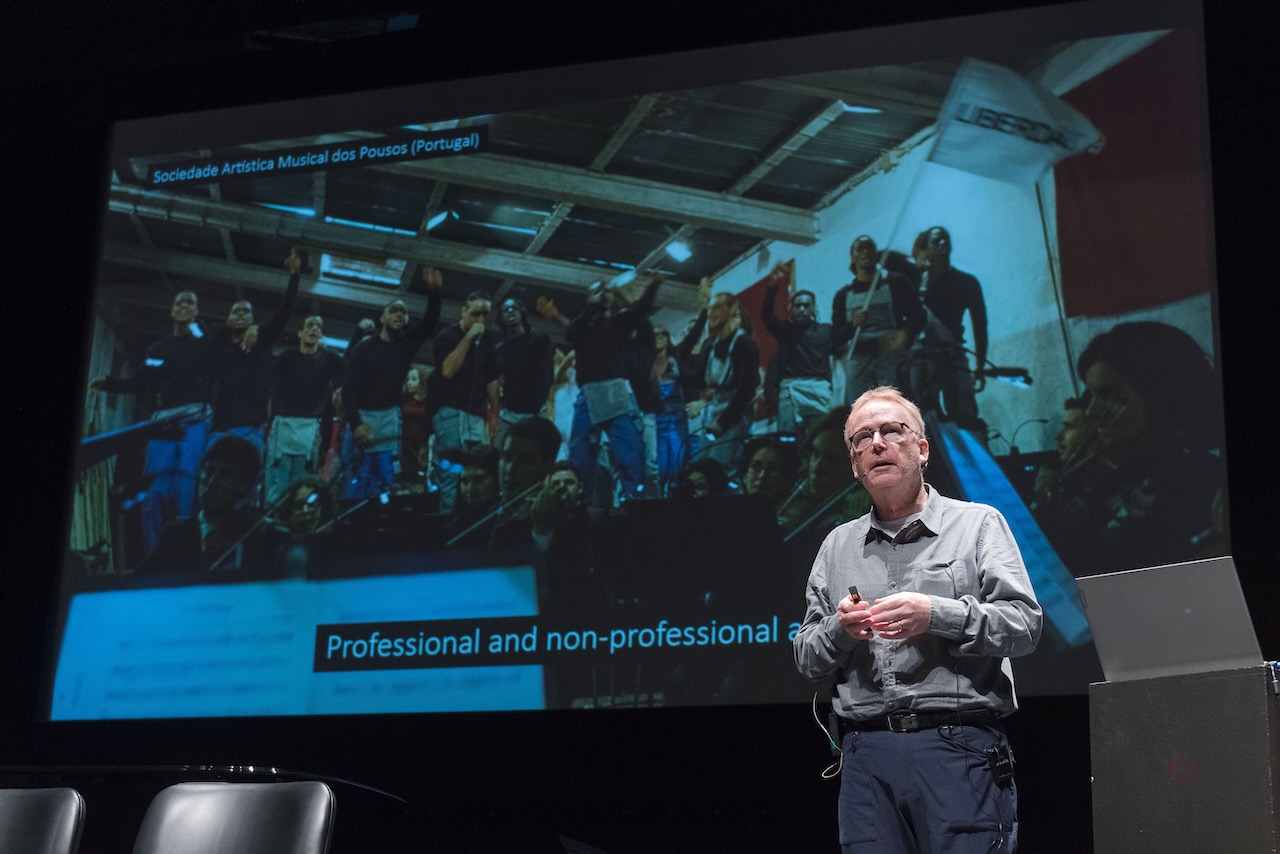
The broad lines of international cultural policy were established after the Second World War. Principles of cultural democratisation—that the public duty was to spread the art and culture authorities implicitly deem good—were adopted by the new European welfare states. This began to be strongly contested in the 1960s by more radical ideas of cultural democracy: pluralism, participation, equity, and cocreation as human rights. Today, cultural policy – the basis on which public authorities support artists and cultural services – is not even understood, while culture is misused by both political extremes. This session will explain the basis of these problems and propose cultural policy principles rooted in human rights and democracy that can guide society through uncertain times. It will show why every community arts practitioner and policymaker should take care of cultural policy and support everyone in learning, debating, and cocreating it.
Arlene Goldbard & François Matarasso | Seminar | United States & United Kingdom